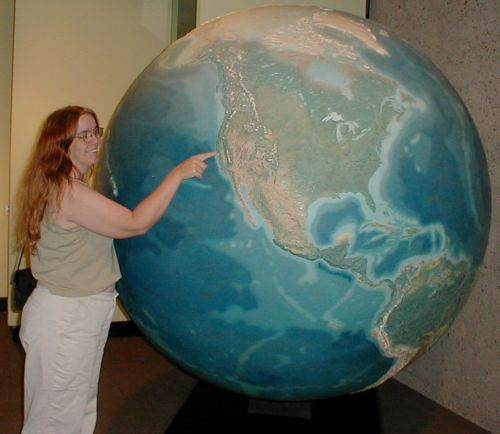
I just signed up as a student for the AGU fall meeting:
I had to answer the hardest question in the world.
It said, "Area of scientific interest: PICK ONE"
ONE????
*explode*










The Geologic Podcast Episode #990
16 hours ago
In India the other day, a young girl, distraught with fear that the world was ending when the LHC turned on, killed herself. She died, because she didn’t understand the truth.
Now that site is less funny, isn’t it? All over the world, in all different countries, people are raised to believe in superstitious nonsense, and raised to believe with all their hearts that it’s real.
And when we do that, we do far more than remove people from reality. We leave them vulnerable to all manners of nonsense, from believing in fairies to truly and honestly thinking the LHC will destroy the planet. People don’t learn how to think critically, and then they drink homeopathic water instead of taking real medicine, they chelate their children, or they deny their children vaccinations. And when that happens, people die. Children die.
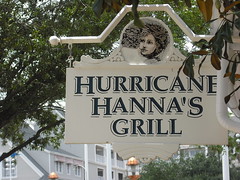
"Hanna produced tropical storm force winds and heavy rains across the U.S. Gulf Coast. In all, [Hanna] left $20.3 million dollars in damage and three deaths.
"Despite the damage, the name Hanna was not retired and is on the 2008 list."
http://www.nhc.noaa.gov/aboutnames.shtml
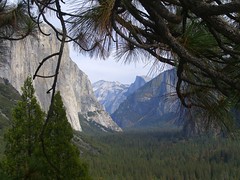
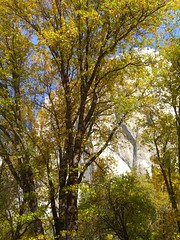
Powerful as [the photos] are, they can't evoke the sublimity of the place. I'm damned sure that I can't, either. That's why I've taken more than a month to even begin to fumble my way toward a post about Yosemite.
Traffic stopped. Crowds wearing protective eye wear cheered and whistled as the moon covered the sun, the wind died and day became night.
Lucas Heinrich, a physics student from Berlin who traveled to Novosibirsk with classmates, described the eclipse as "unbelievable."
"It became cold and dark, and suddenly it was light again. I am very happy — it was worth the trip," Heinrich said.
Hold up the map today that "Governor" Swickard and his compatriots sketched out . . . and the distinctions that made this part of the country feel worthy of statehood in the 1930s — different in its geography, history, economic base and political outlook — are mostly still there.
The undulating landscape of tall grasses that shaped the horsemen and women of the Sioux, Cheyenne and Crow, and the ranchers who came later, is still there, in all its lush exuberance. Economic life shifted gears — coal-bed methane and hobby ranching encroached, sugar beets and flour-milling fell away — but the high grass persists, and that defines the land and the culture — then and now.
"The grass culture — people who make a living from growing grass, or from the animals that eat the grass — that was Absaroka," said Ken Kerns, a 76-year-old rancher who has lived most of his life on the Double Rafter Ranch . . . .
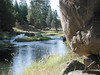

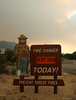

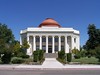
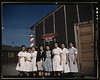

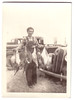
More images from Jefferson:

Poets say science takes away from the beauty of the stars — mere globs of gas atoms. Nothing is 'mere'. I too can see the stars on a desert night, and feel them. But do I see less or more? The vastness of the heavens stretches my imagination— stuck on this carousel my little eye can catch one-million-year-old light. A vast pattern— of which I am a part... What is the pattern or the meaning or the why? It does not do harm to the mystery to know a little more about it. For far more marvelous is the truth than any artists of the past imagined it. Why do the poets of the present not speak of it? What men are poets who can speak of Jupiter if he were a man, but if he is an immense spinning sphere of methane and ammonia must be silent.
NASA Satellites Discover What Powers Northern Lights
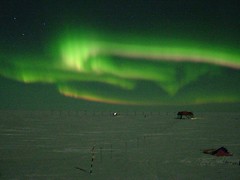
GREENBELT, Md. — Researchers using a fleet of five NASA satellites have discovered that explosions of magnetic energy a third of the way to the moon power substorms that cause sudden brightenings and rapid movements of the aurora borealis, called the Northern Lights.
The culprit turns out to be magnetic reconnection, a common process that occurs throughout the universe when stressed magnetic field lines suddenly snap to a new shape, like a rubber band that's been stretched too far.
"We discovered what makes the Northern Lights dance," said Dr. Vassilis Angelopoulos of the University of California, Los Angeles. Angelopoulos is the principal investigator for the Time History of Events and Macroscale Interactions during Substorms mission, or THEMIS.
Substorms produce dynamic changes in the auroral displays seen near Earth's northern and southern magnetic poles, causing a burst of light and movement in the Northern and Southern Lights.
Substorms often accompany intense space storms that can disrupt radio communications and global positioning system signals and cause power outages. Solving the mystery of where, when, and how substorms occur will allow scientists to construct more realistic substorm models and better predict a magnetic storm's intensity and effects.
"As they capture and store energy from the solar wind, the Earth's magnetic field lines stretch far out into space. Magnetic reconnection releases the energy stored within these stretched magnetic field lines, flinging charged particles back toward the Earth's atmosphere," said David Sibeck, THEMIS project scientist at NASA's Goddard Space Flight Center in Greenbelt, Md. "They create halos of shimmering aurora circling the northern and southern poles."
Scientists directly observe the beginning of substorms using five THEMIS satellites and a network of 20 ground observatories located throughout Canada and Alaska. Launched in February 2007, the five identical satellites line up once every four days along the equator and take observations synchronized with the ground observatories. Each ground station uses a magnetometer and a camera pointed upward to determine where and when an auroral substorm will begin. Instruments measure the auroral light from particles flowing along Earth's magnetic field and the electrical currents these particles generate.
During each alignment, the satellites capture data that allow scientists to precisely pinpoint where, when, and how substorms measured on the ground develop in space. On Feb. 26, 2008, during one such THEMIS lineup, the satellites observed an isolated substorm begin in space, while the ground-based observatories recorded the intense auroral brightening and space currents over North America.
These observations confirm for the first time that magnetic reconnection triggers the onset of substorms. The discovery supports the reconnection model of substorms, which asserts a substorm starting to occur follows a particular pattern. This pattern consists of a period of reconnection, followed by rapid auroral brightening and rapid expansion of the aurora toward the poles. This culminates in a redistribution of the electrical currents flowing in space around Earth.
THEMIS is the fifth medium-class mission under NASA's Explorer Program. The program, managed by the Explorers Program Office at Goddard provides frequent flight opportunities for world-class space investigations in heliophysics and astrophysics. The University of California, Berkeley's Space Sciences Laboratory in Berkeley, Calif., managed the project development and is currently operating the THEMIS mission. ATK Space (formerly Swales Aerospace) of Beltsville, Md., built the THEMIS satellites.
The THEMIS team's findings will appear online July 24 in Science Express and Aug. 14 in the journal science. For more information about the THEMIS mission, visit:
http://www.nasa.gov/themis
"In general, people are familiar with fire and understand a good deal about its mechanics, so fire risks are often underestimated or discounted. In contrast, the unfamiliar, invisible hazards posed by electromagnetic radiation tend to appear riskier and draw more concern and demands for government control."That doesn't sound quite right to me, but it's research-backed, while my hunches are only hunches. We talk a lot about quakes here in the SF Bay Area. Some of us are vaguely antsy much of the time, some are rational and careful, some ignore any risk at all. But other places I've thought about living -- Portland, Oregon, most usually -- have risks too. Portland's had fierce and dangerous wind, it has the potential for a massive quake (though like on the New Madrid, their quakes are also less frequent than ours), and as California dries out, so will Oregon, and perhaps it will eventually be like central California is now.
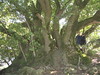
The native plants unique to California are so vulnerable to global climate change that two-thirds of these "endemics" could suffer more than an 80 percent reduction in geographic range by the end of the century, according to a new University of California, Berkeley, study.Because endemic species -- native species not found outside the state -- make up nearly half of all California's native plants, a changing climate will have a major impact on the state's unparalleled plant diversity, the researchers warn.